
If you’re starting a garden and feel overwhelmed trying to plan everything out, I get it.
There is so much information out there, and it can make it feel way more complicated than it needs to be.
This is my real garden layout using 8 raised beds here in Virginia. Nothing fancy, just what I actually grow, preserve, and use.
My Garden Setup
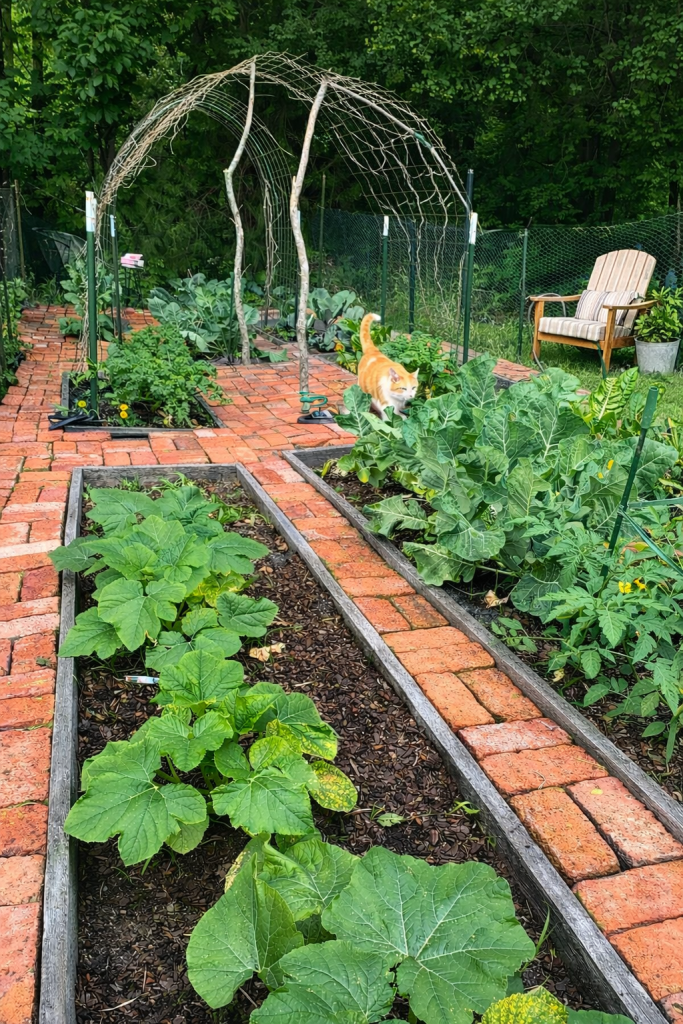
I have:
- 8 raised beds about 5 feet each
- a trellis system for pole beans
- a mix of vegetables, greens, and herbs
- marigolds planted around the beds
I focus on:
- food I actually eat
- things I can preserve like canning
- plants that grow well together
What I Grow Every Year
- pole beans for canning
- tomatoes
- zucchini or squash
- onions and peppers
- greens like lettuce and kale
- herbs
Trellis Bed: Pole Beans
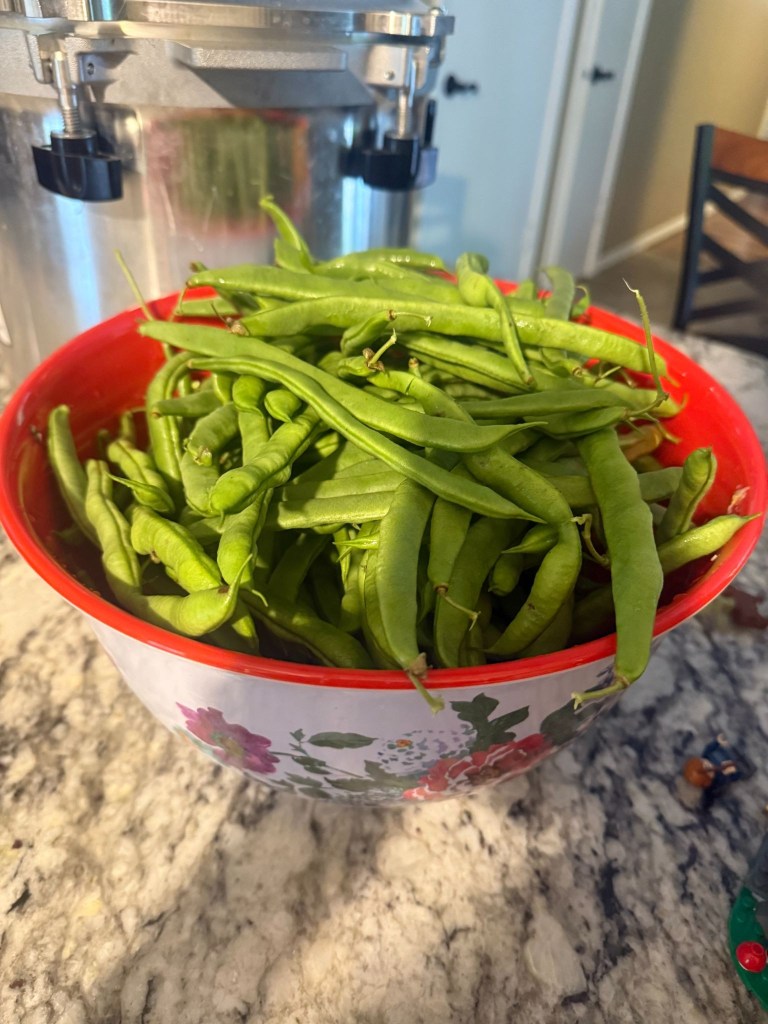
I grow pole beans vertically and use them mostly for canning.
- grow up instead of out
- high yield in a small space
- easy to harvest
Companion note:
- beans can help add nitrogen to the soil
- I avoid planting onions right next to them
Tomato Bed with Companion Herbs
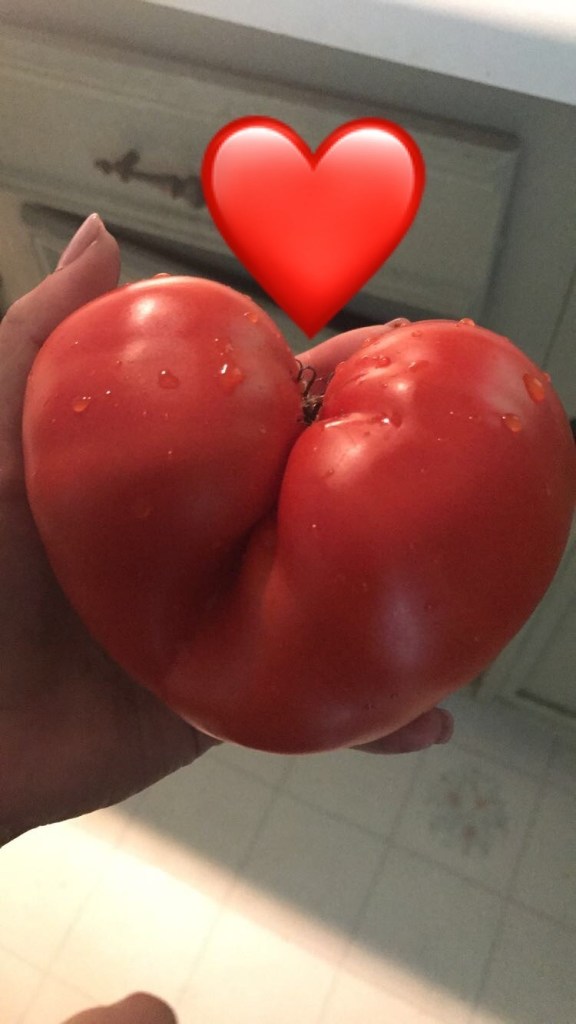
I dedicate a full bed to tomatoes and plant around them:
- basil
- parsley
- marigolds along the edges
These are commonly planted together and may help with pests while keeping everything easy to manage.
Greens and Herb Bed
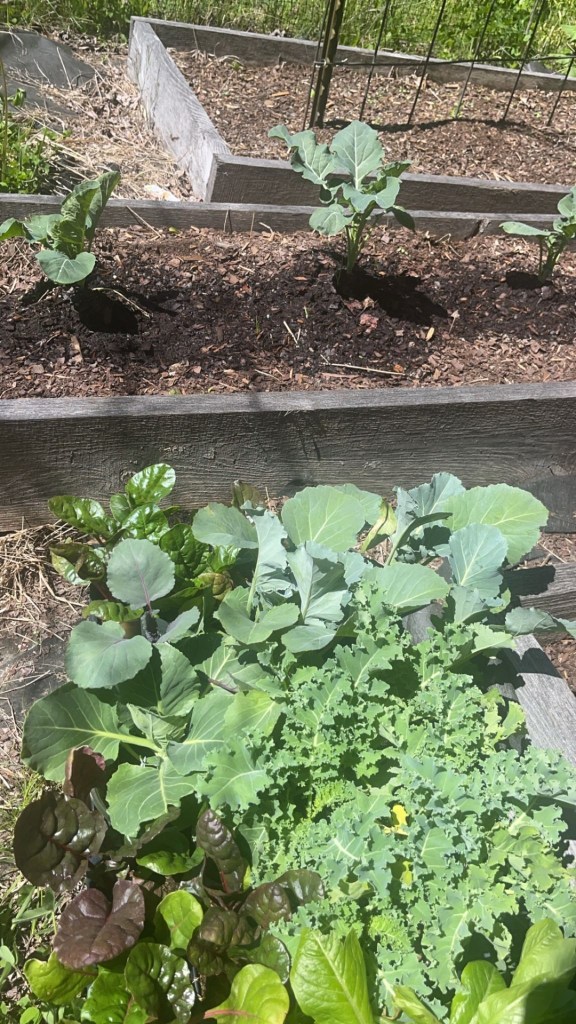
Greens:
- lettuce
- kale
- spinach
Herbs:
- parsley
- cilantro (replanted often)
- chives
- dill
- oregano
This is one of my most used beds because everything is easy to harvest and use daily.
Zucchini and Squash Bed
These need space.
- they spread a lot
- I keep them separate
- I plant marigolds nearby
They produce a lot from just a few plants.
Onion and Pepper Bed
- onions stay compact
- peppers grow upright
- onions may help deter some pests
This bed stays simple and easy to manage.
Marigolds Around the Beds
I plant marigolds around the edges.
They:
- may help deter some pests
- attract beneficial insects
- make the garden feel more alive
Pest Control (What I Actually Do)
I keep pest control simple.
- I lightly dust food-grade diatomaceous earth in dry areas between my beds where pests travel
- I reapply after rain when needed
For slugs:
- I leave a shallow container of beer at soil level to draw slugs away from plants
This, along with spacing and companion planting, keeps things manageable.
Companion Planting (Simple Layout)
| Bed | What’s Planted | Why It Works |
| Pole Beans | Beans on trellis | Adds nitrogen, vertical growth |
| Tomatoes | Tomatoes, basil, parsley, marigolds | Common pairing, may help with pests |
| Greens + Herbs | Lettuce, kale, herbs | Fast growth, easy harvesting |
| Squash/Zucchini | Squash, zucchini, marigolds | Needs space, simple setup |
| Onions + Peppers | Onions, peppers | Compact and efficient |
What I Would Change Next Year
- give squash even more space
- plant cilantro more frequently
- add more vertical growing
- space things more intentionally earlier
- expand my herb section
Final Thoughts
This is not a perfect garden layout. It is just one that works well for me in my Zone 7A in the Appalachian mountains of Virginia. Yours may look a bit different depending on your location, but you can easily find out what plants suit your zone the most here on the USDA website.
Gardening gets easier every year.
You do not need a perfect setup to start, you just need to start.
Even a simple raised bed with a few tomato plants can teach you more than hours of research ever will.
Start small, keep notes, and build the garden that works for your life.
My 5 Must-Have Garden Products I’d Buy Again
If I were starting my garden over from scratch, these are the five things I would buy again without hesitation. These have either saved me time, improved my harvest, or made gardening a whole lot easier.
1. Worm Castings (My Biggest Garden Upgrade)
This made the biggest difference in my garden, especially with my tomatoes. After I started adding worm castings to my soil, I noticed stronger plants, healthier leaves, and much better production overall.
If I had to recommend just one thing for beginners, this would probably be it.
2. LED Grow Light (Perfect for Seedlings)
If you start seeds indoors, this helps prevent weak, leggy seedlings and gives them a much stronger start before planting outside.
I use this for herbs, tomatoes, and early spring seedlings when the weather still is not ready.
3. RainPoint Water Timer (Absolute Lifesaver)
This is one of those things you do not realize you need until you have it.
It saves so much time during summer, keeps watering consistent, and is especially helpful if you are away for a weekend or on vacation. Honestly, this one saves stress more than anything.
4. Raised Garden Bed with Trellis
I love having built-in vertical growing space for pole beans, cucumbers, and anything that likes to climb.
This saves so much room and helps maximize smaller garden spaces. I would absolutely buy at least two of these again.
Shop the Raised Bed with Trellis Here
5. Galvanized Raised Garden Beds
These are great for building out a full garden layout quickly and keeping everything organized.
They are sturdy, beginner-friendly, and help create a much cleaner growing space. I would personally buy at least two sets of these so you have four total beds to start with.


Leave a Reply